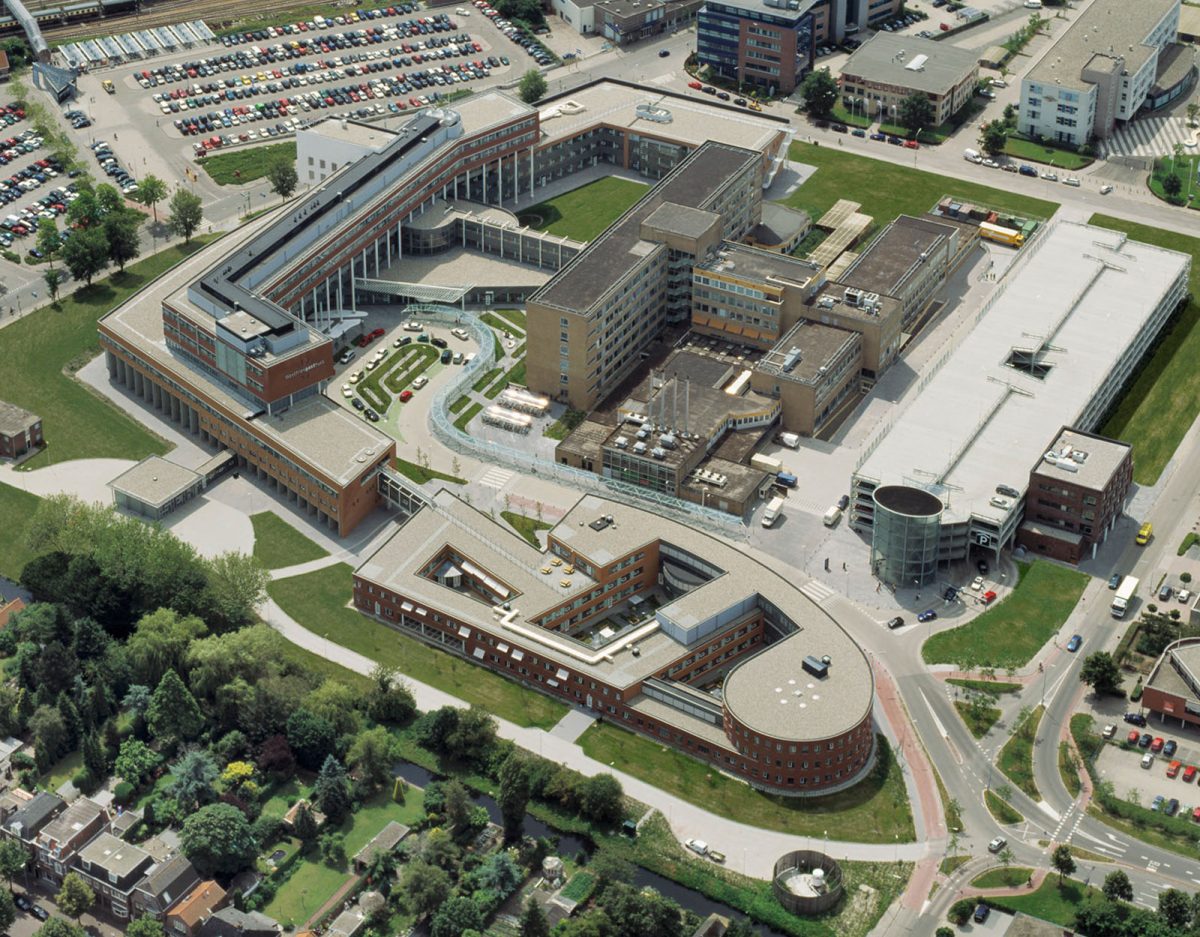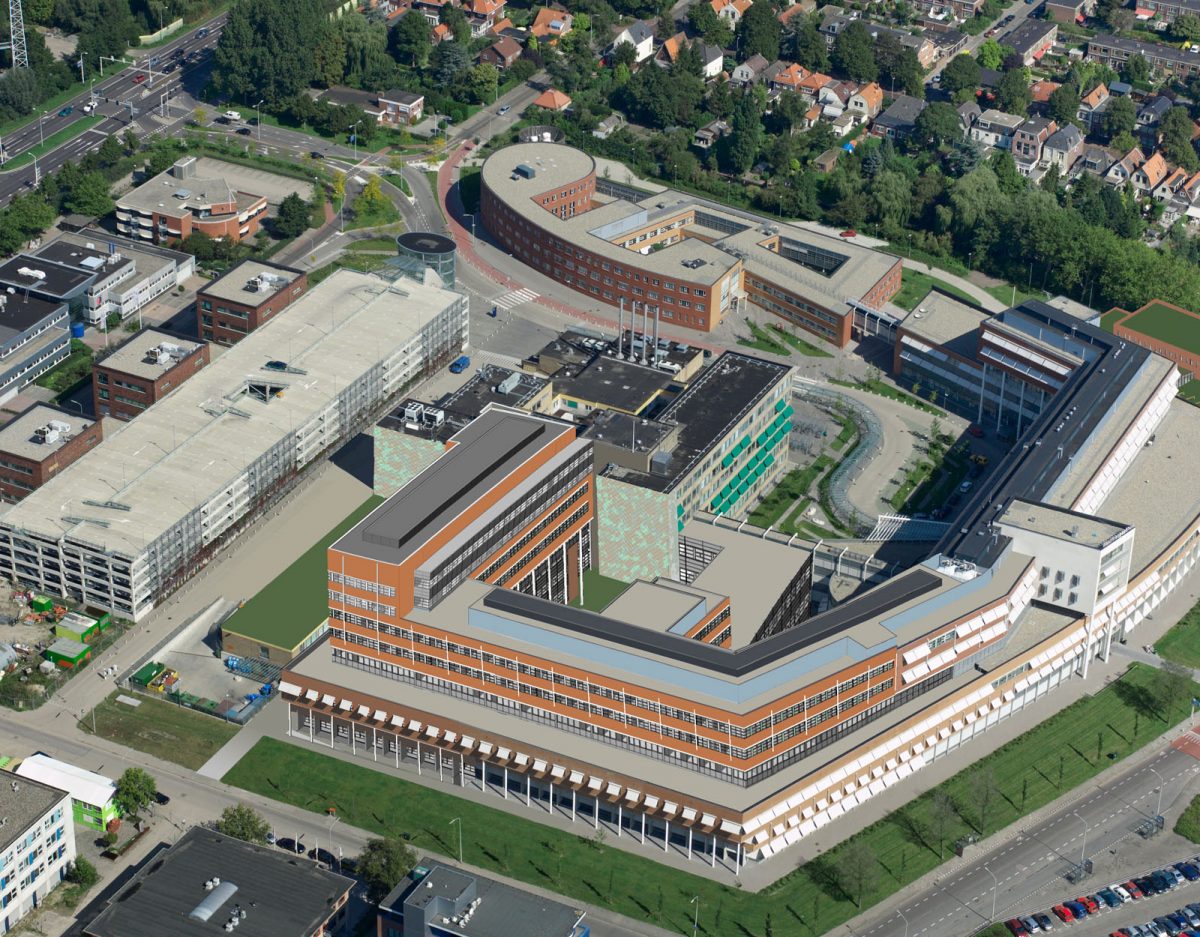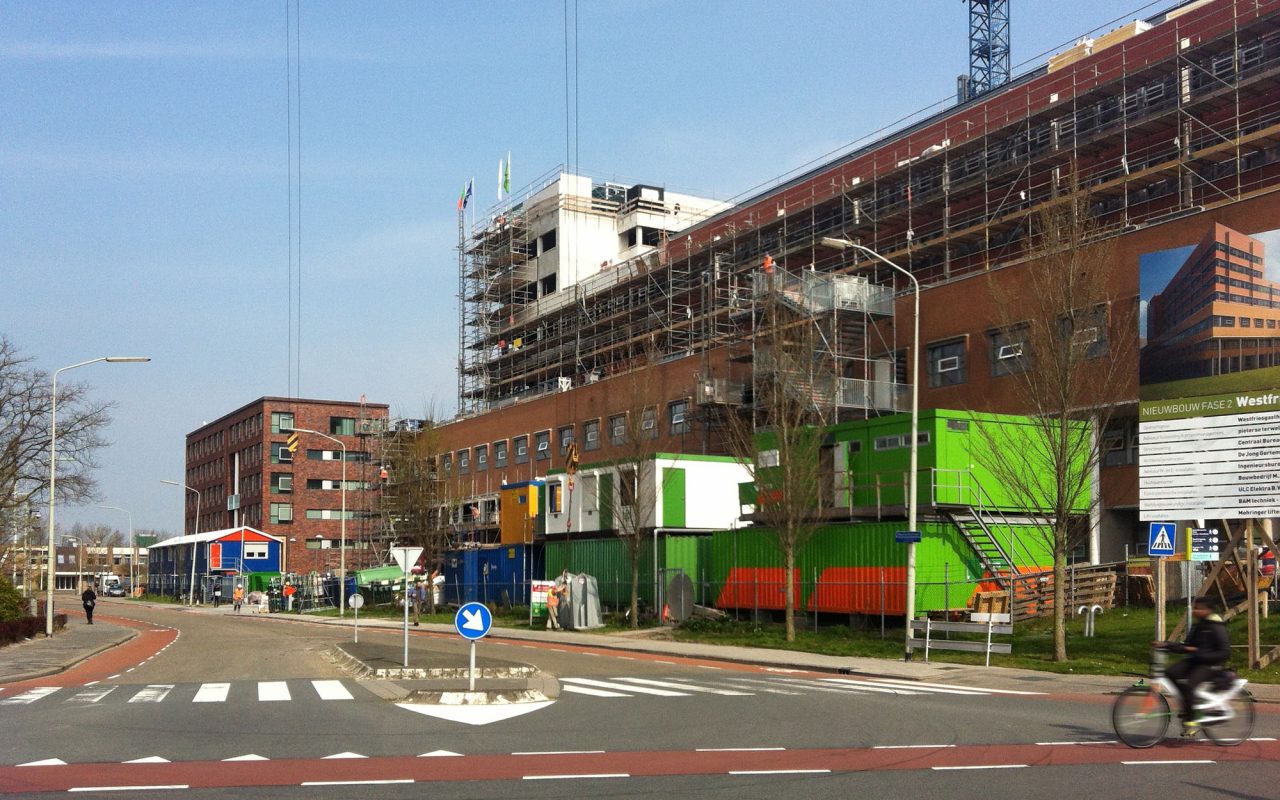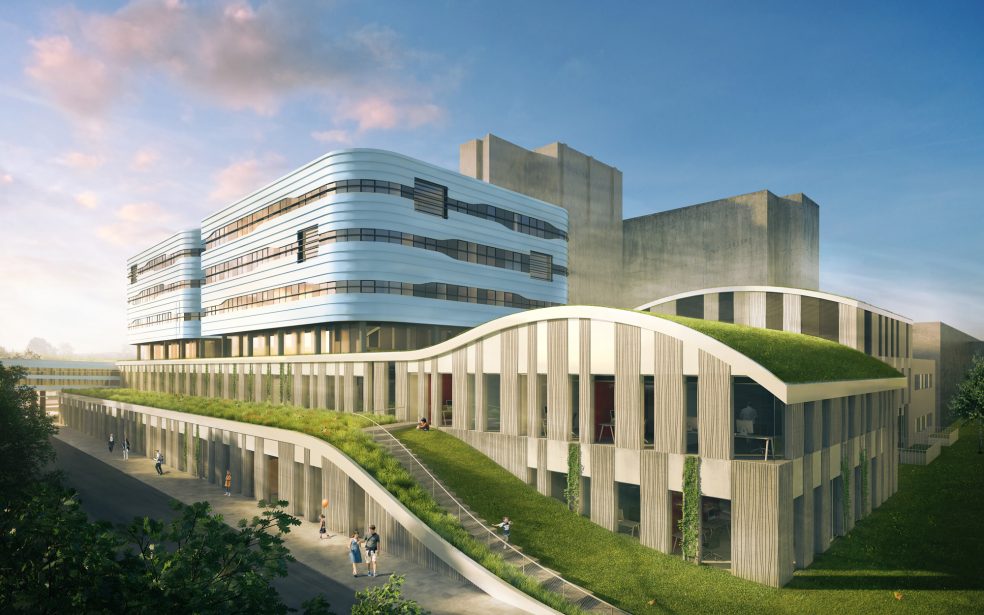
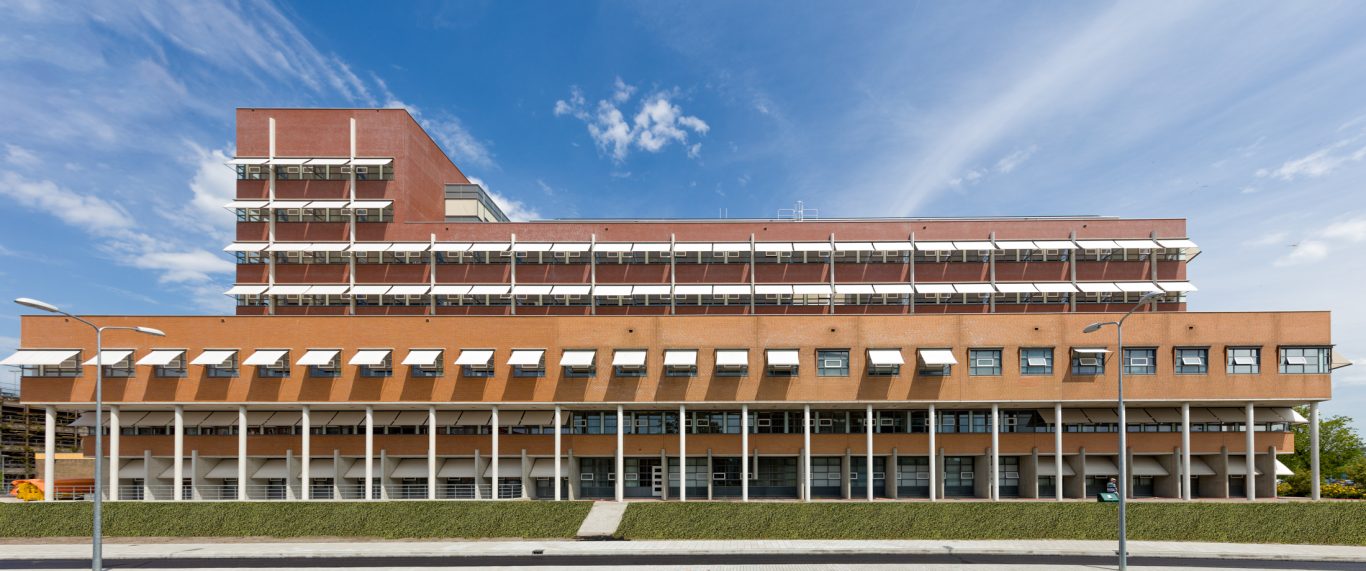

In phase 1, a new building is constructed alongside the existing St. Jan hospital; in phase 2, a second building is installed, at which point the old St. Jan hospital will be demolished. The resultant empty space at the heart of the complex can over the years be transformed from its initial role as a city park into space for future hospital expansion. In this way, infinite possibilities will be created for writing off and replacing buildings, while allowing the hospital to operate, uninterrupted.
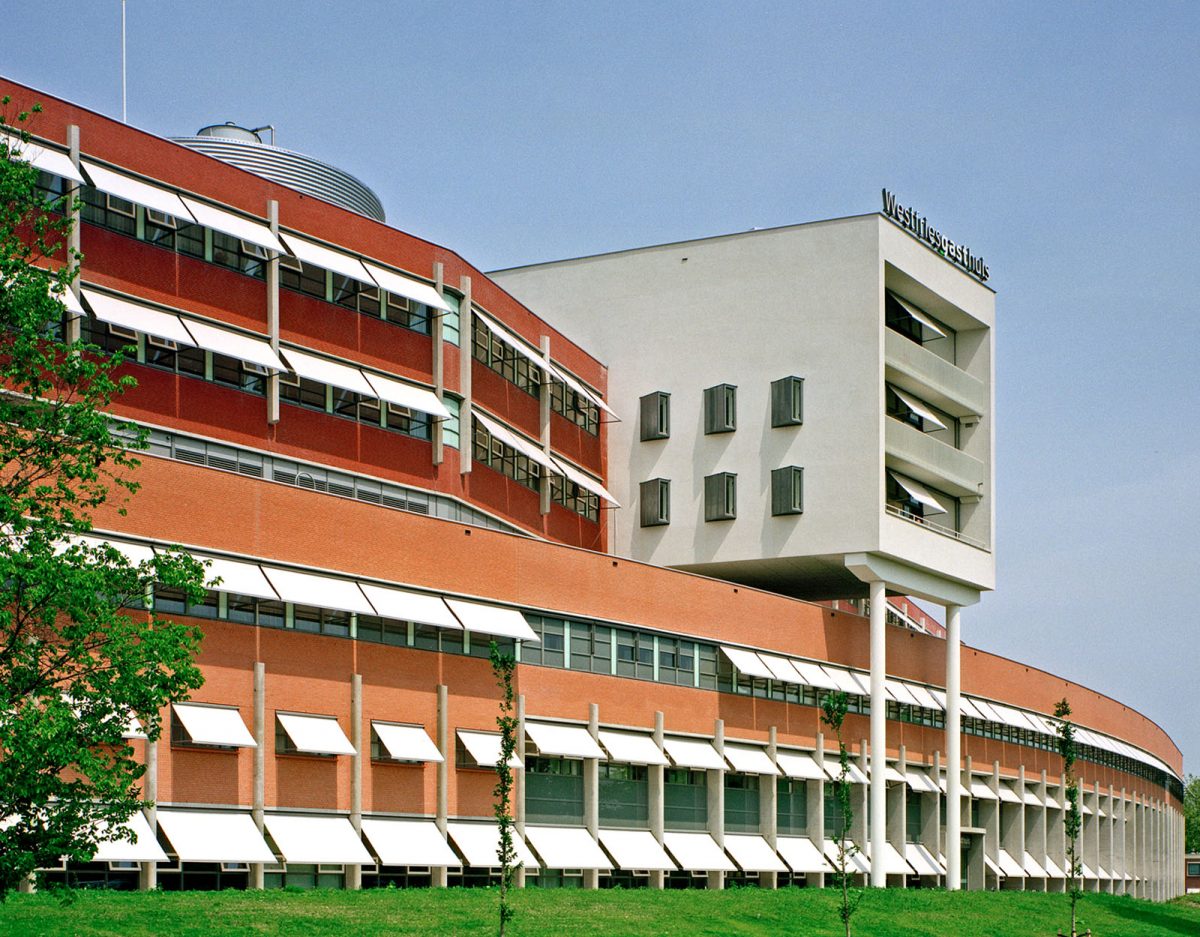
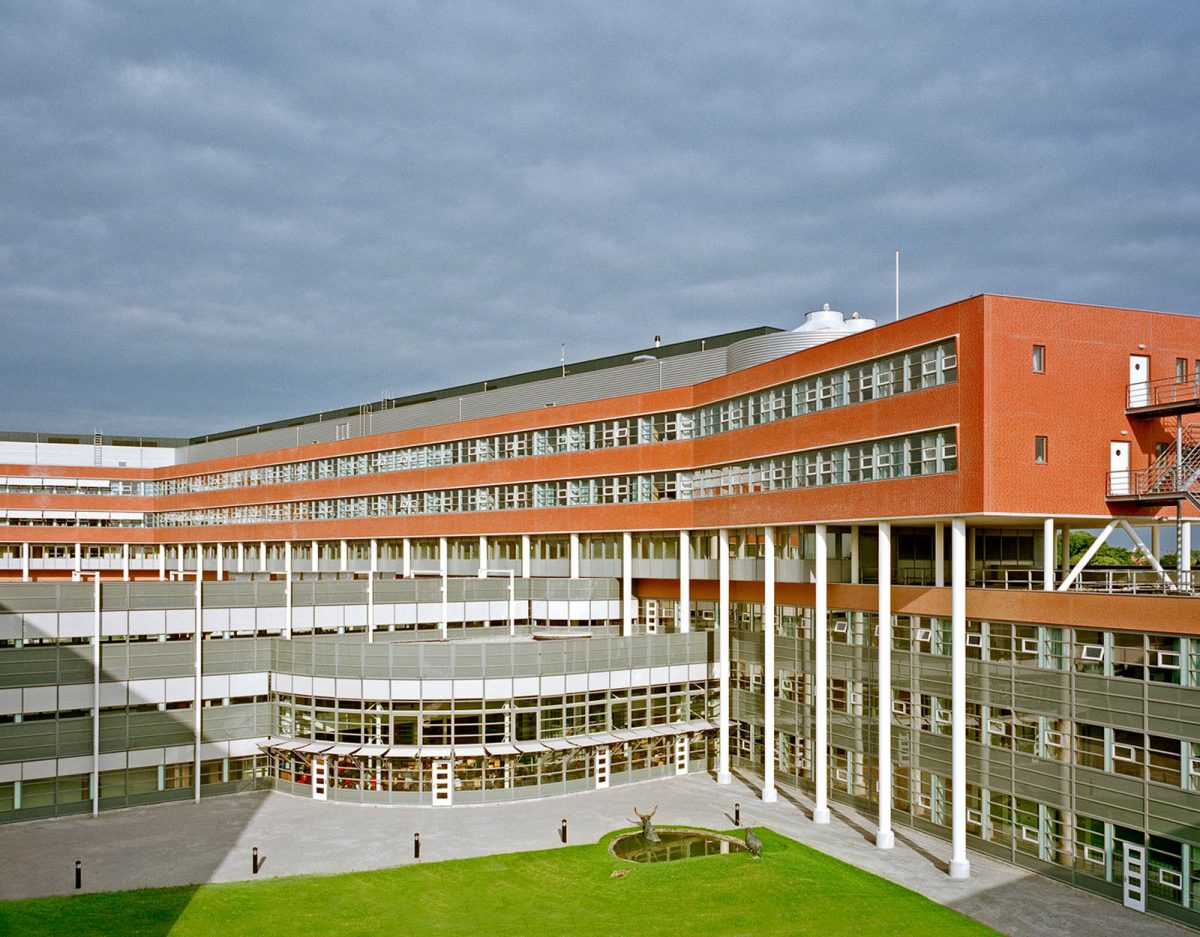
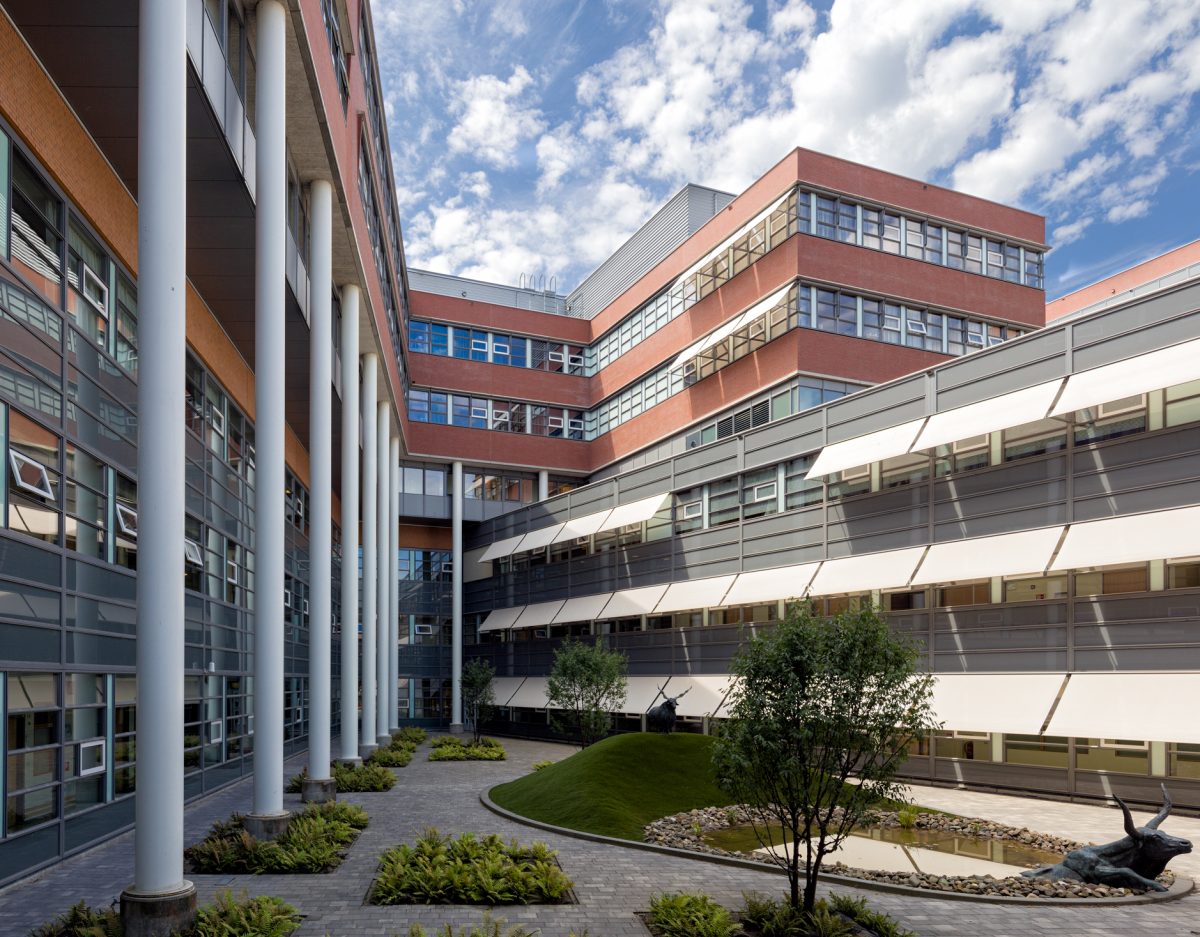
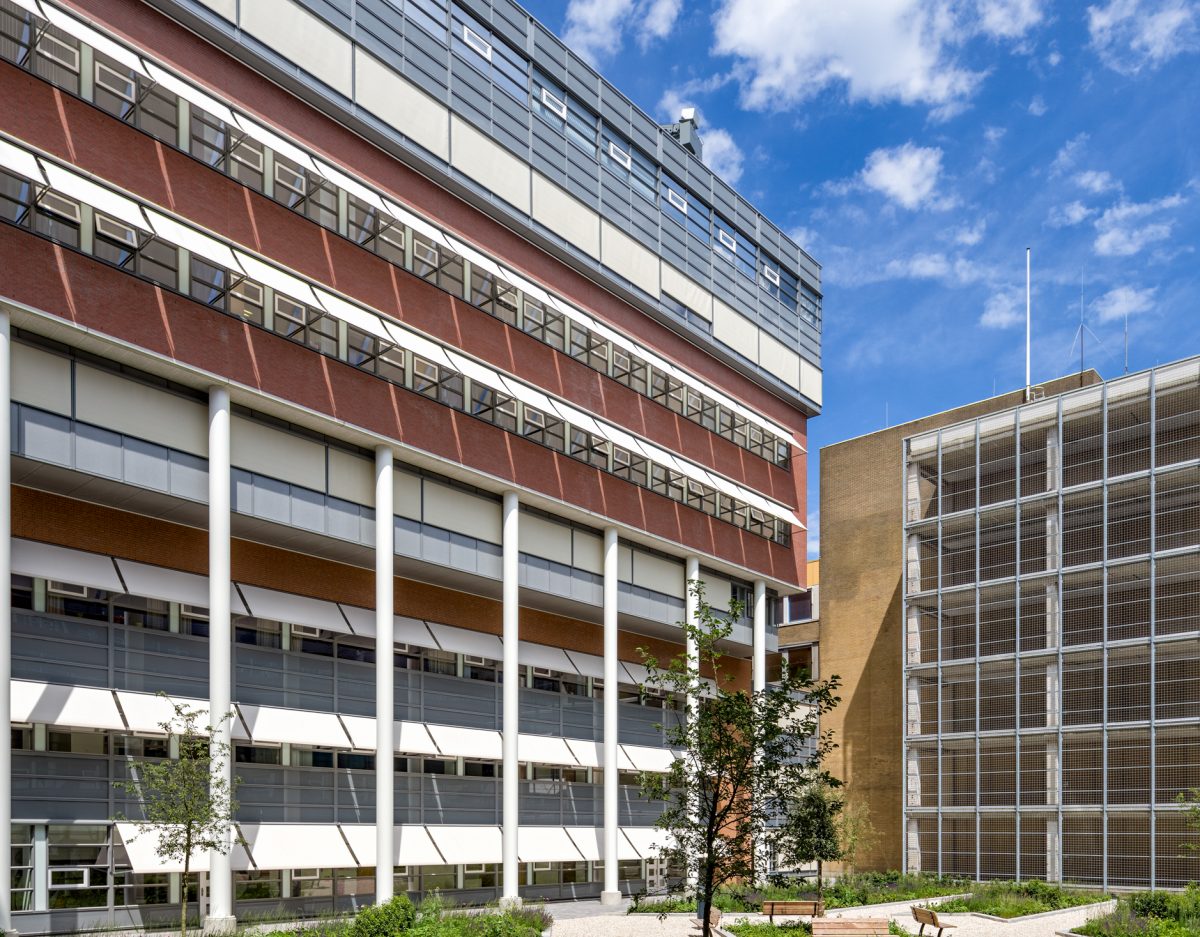
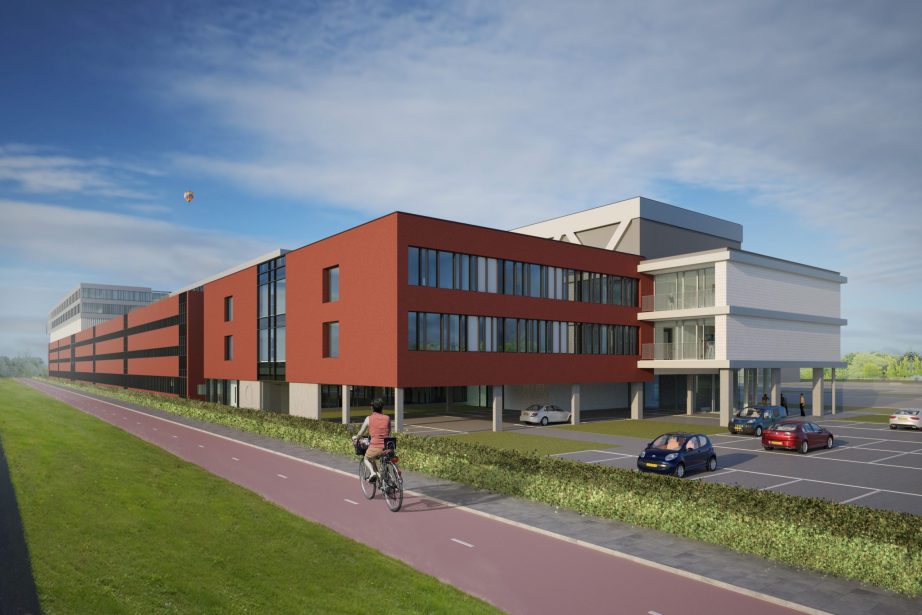
This elongated ribbon shape is unusual for a hospital. However, a linear structure of this kind offers numerous advantages. The building height remains restricted and the size of outpatients’ clinics and nursing departments remains very flexible. Additional spatial requirements can be met within the contours of the building, without the need for building a new wing or additional floor.
Never lost
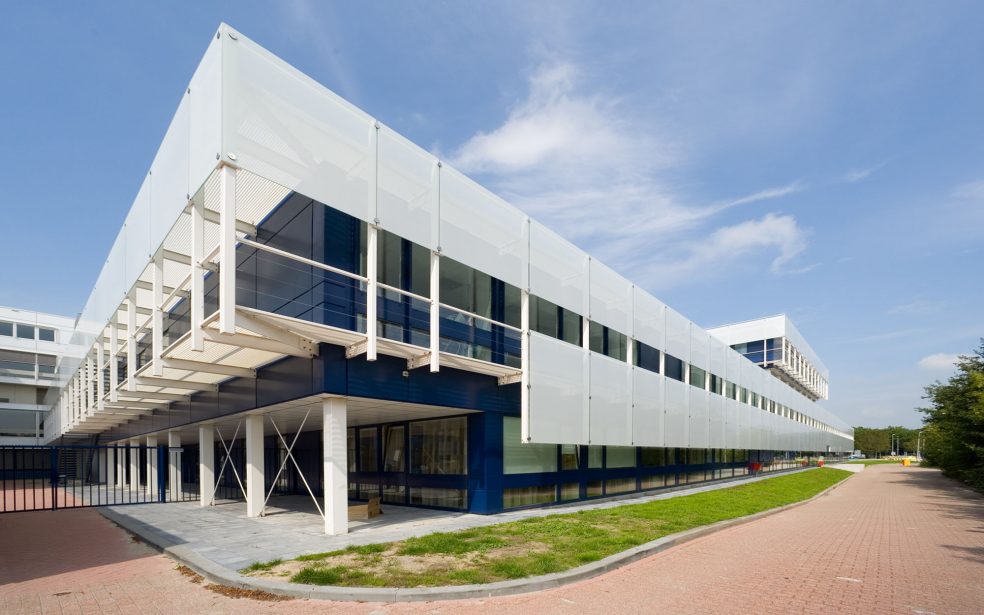
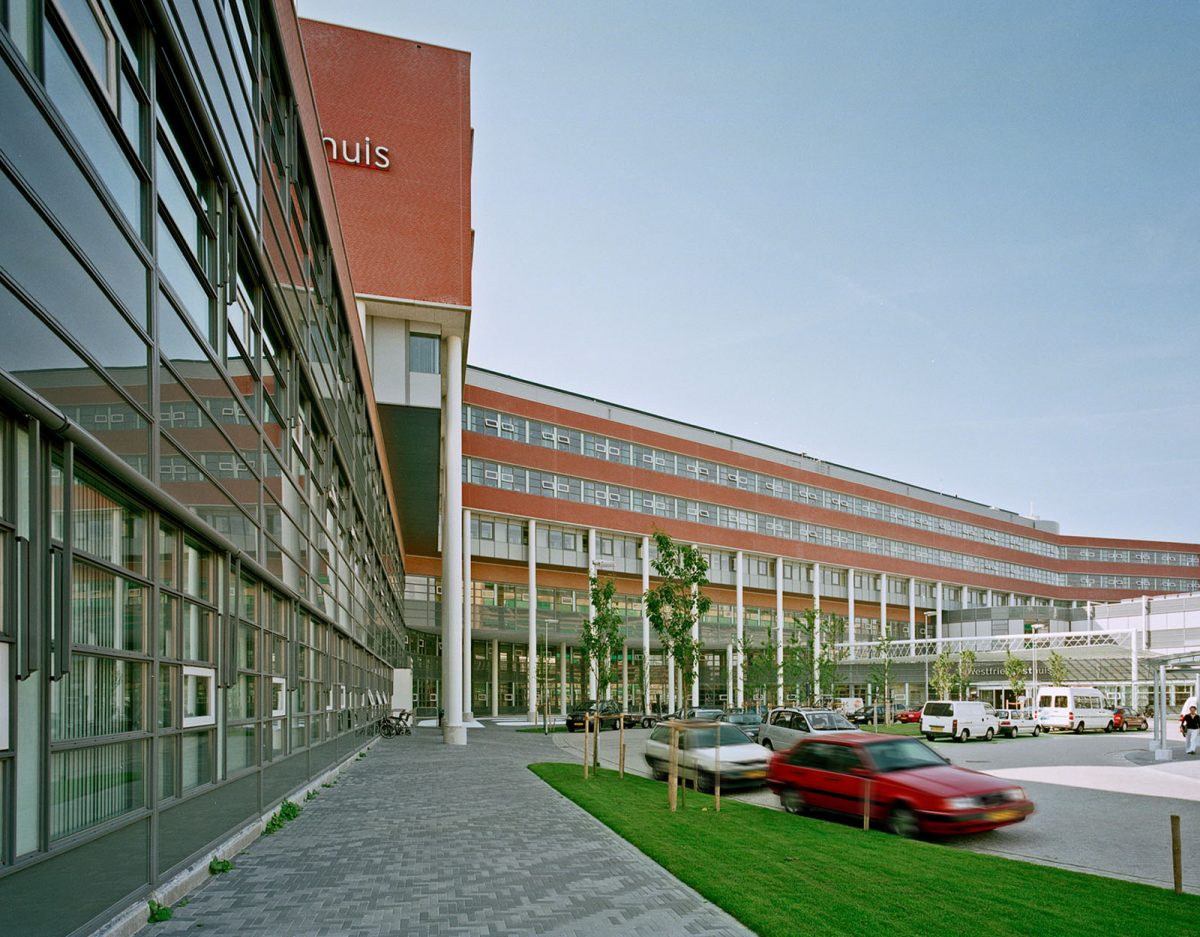
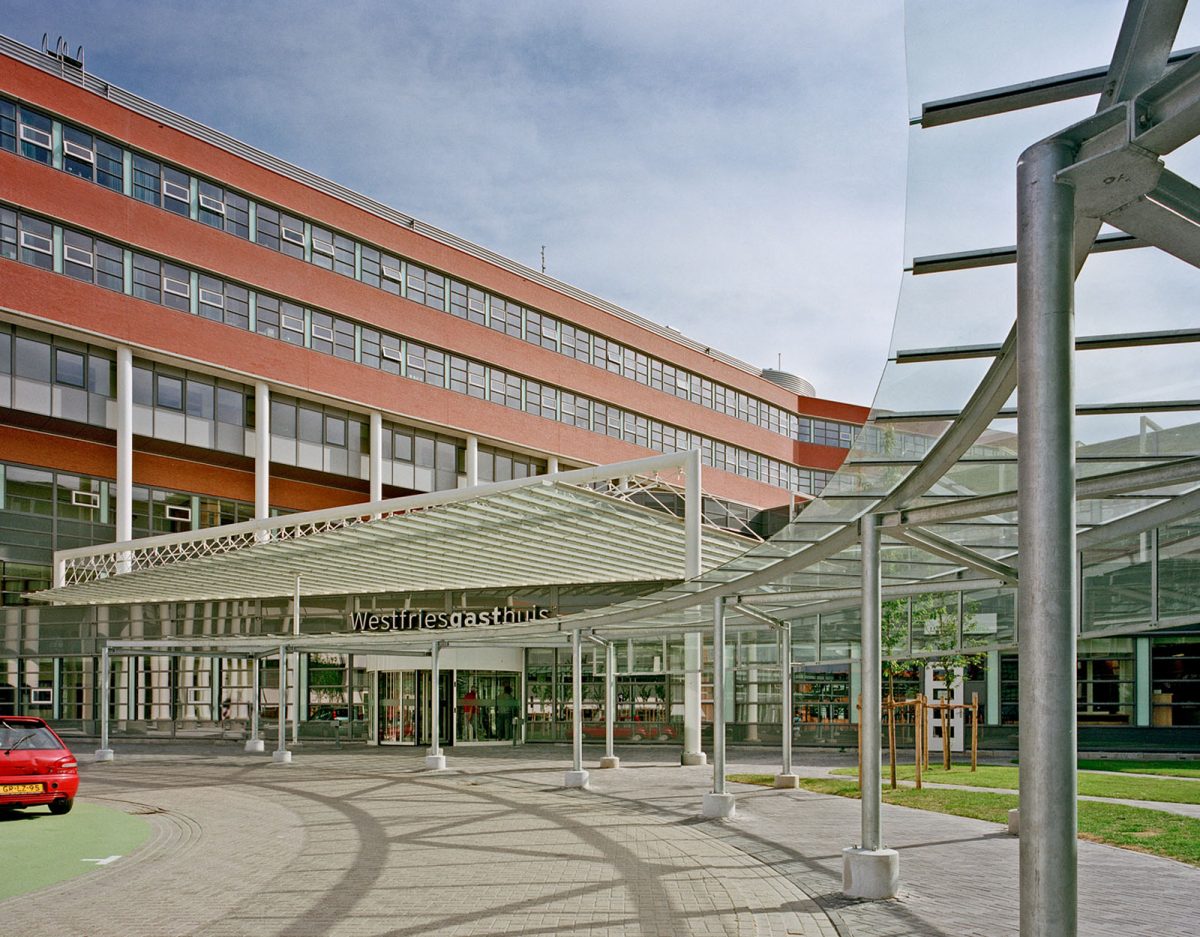
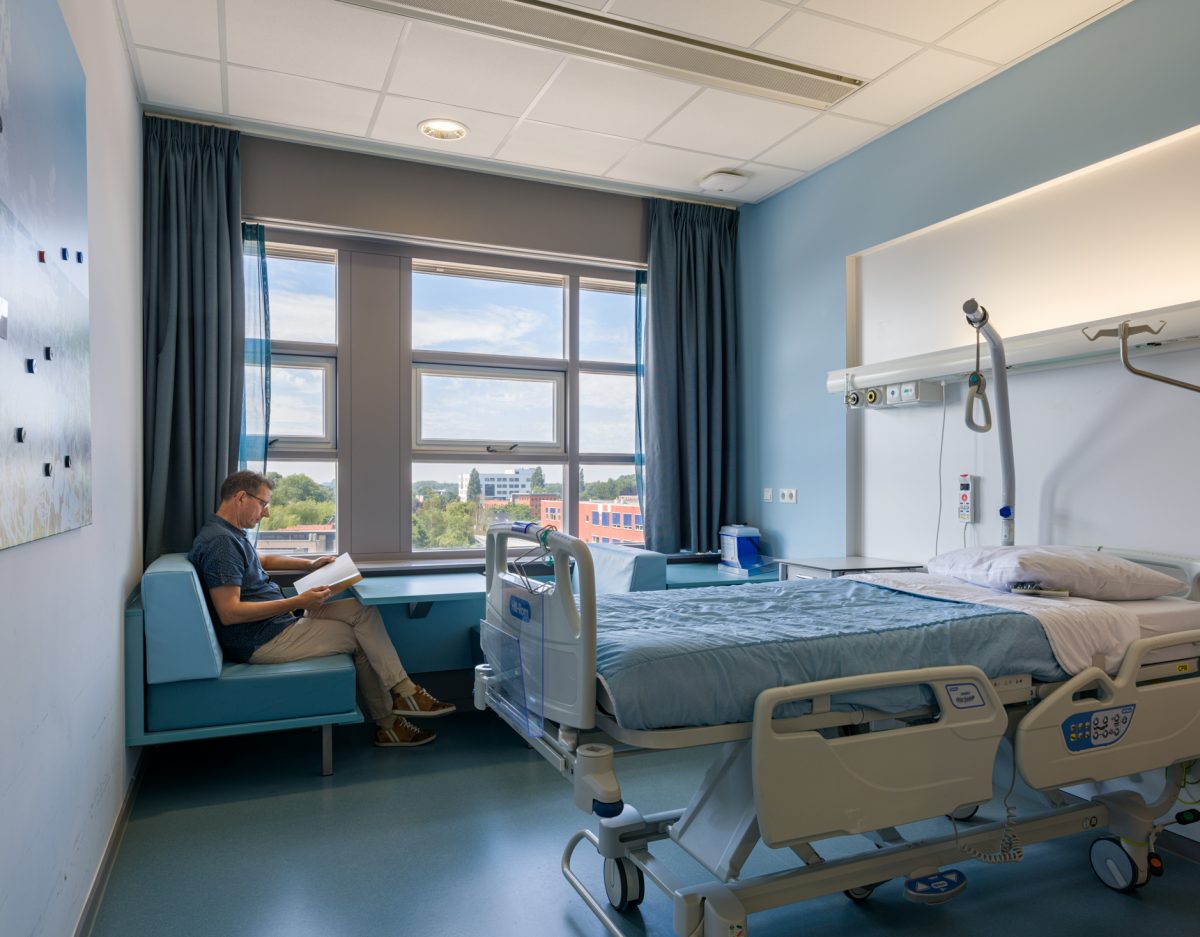
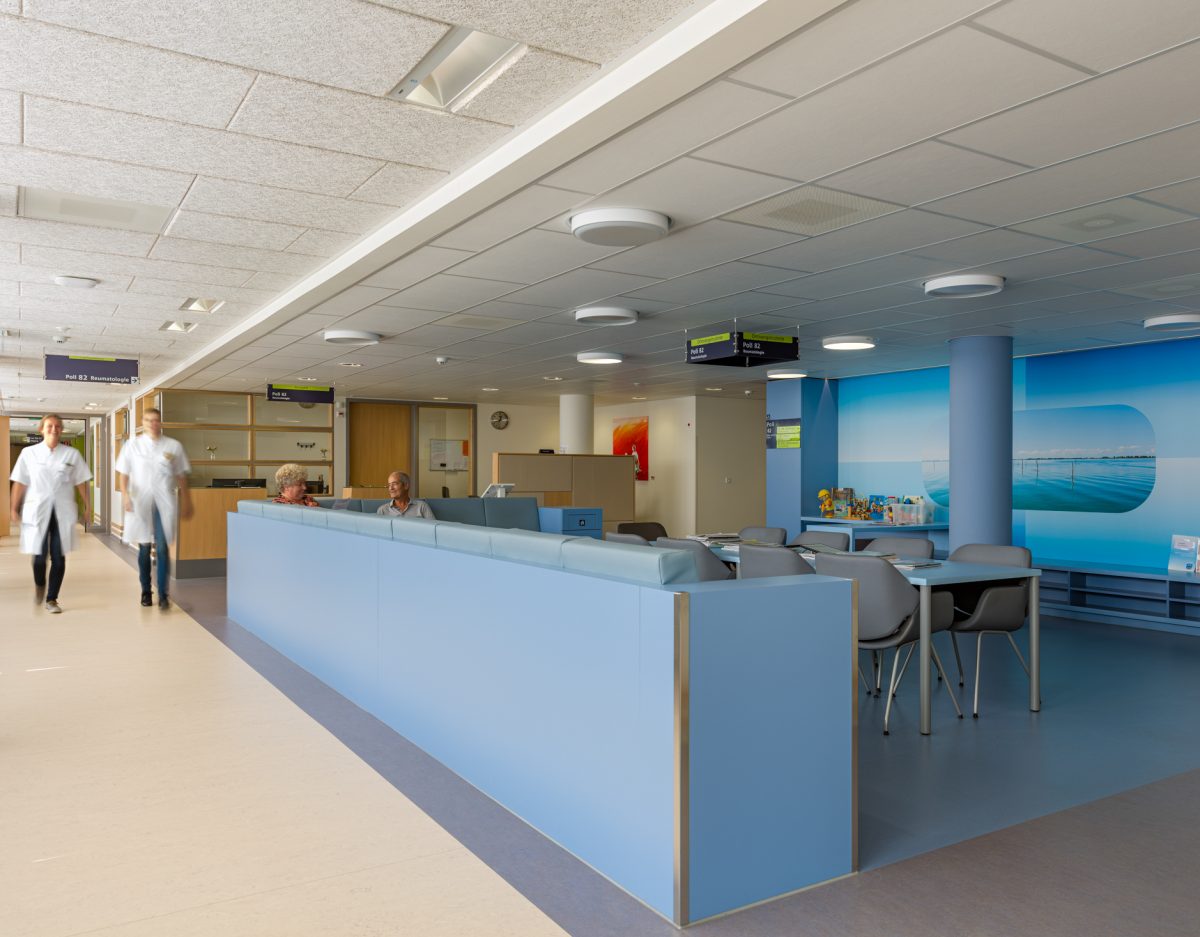
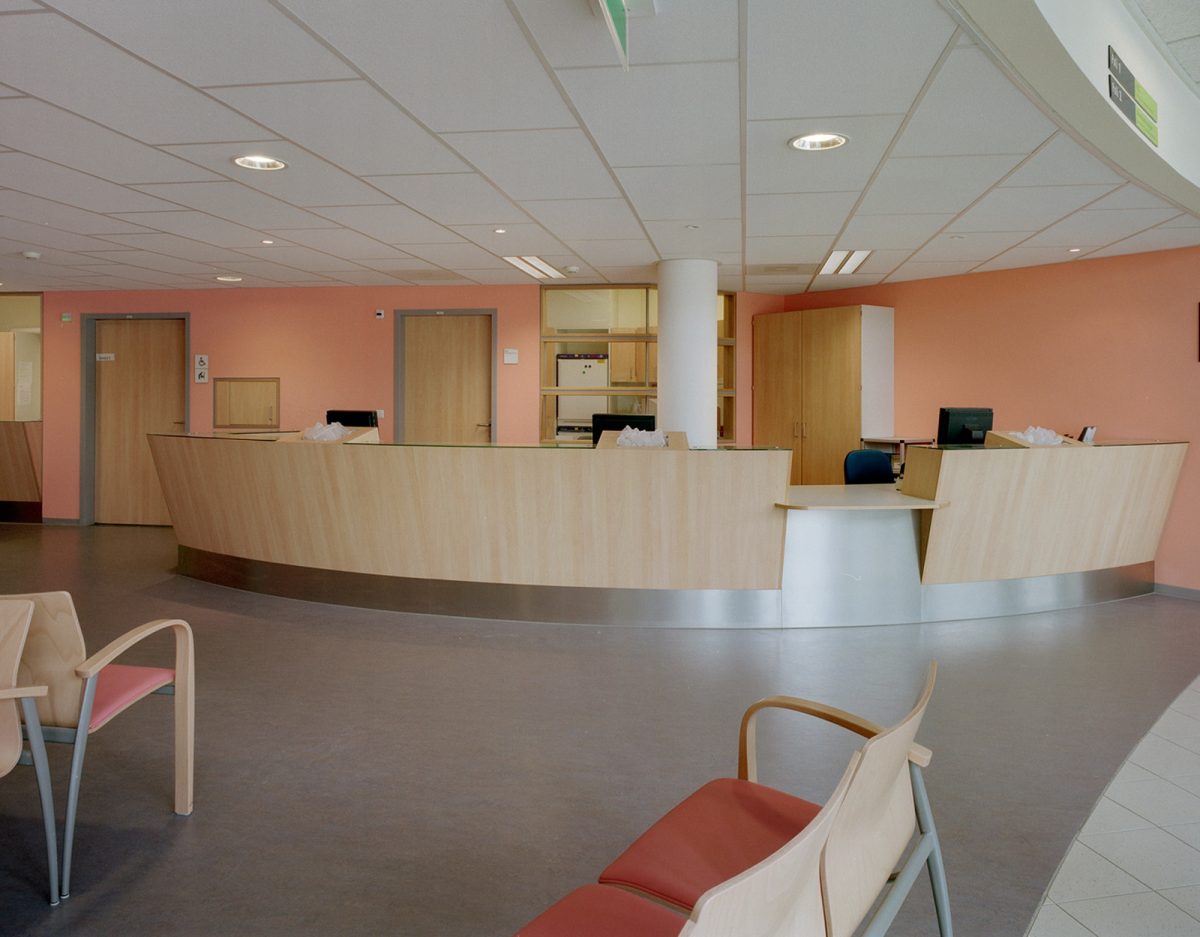
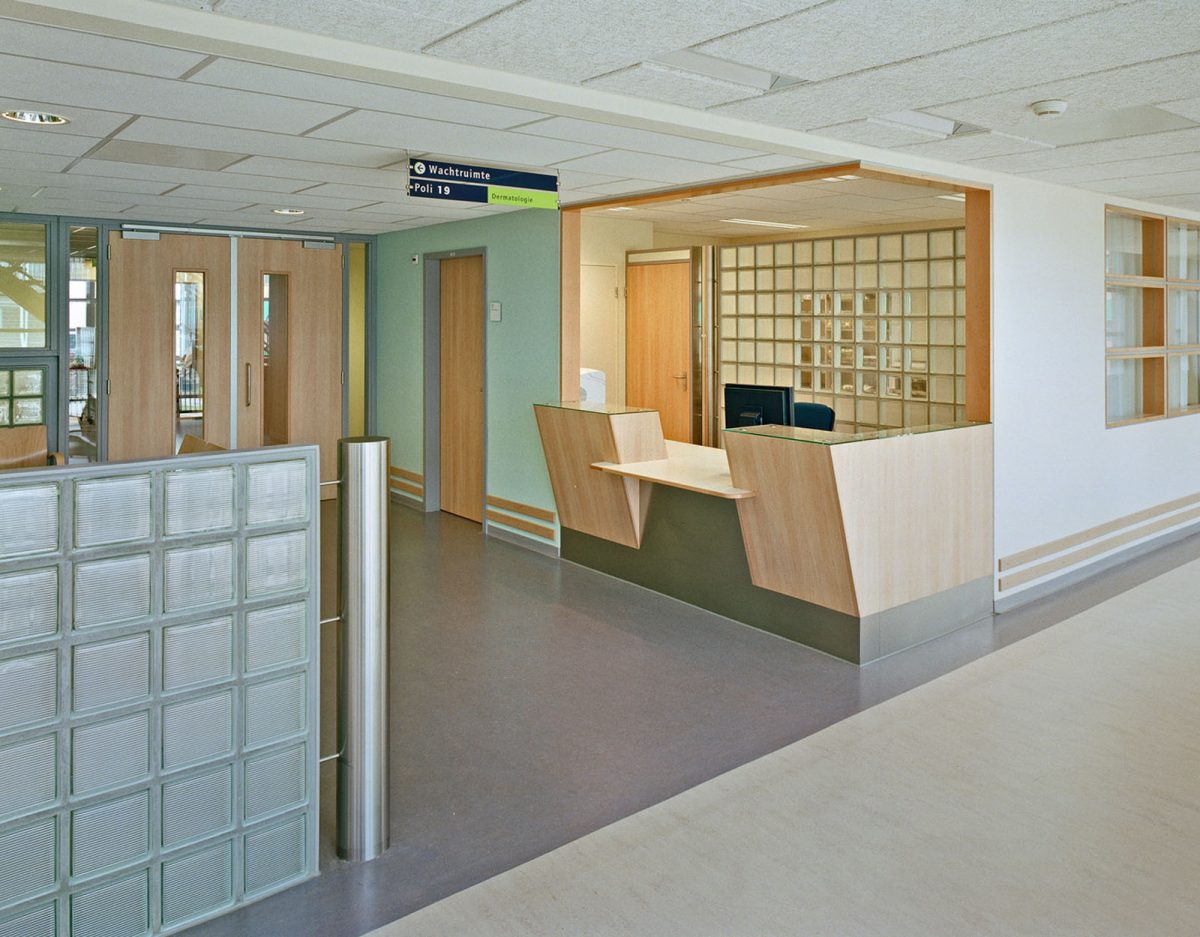
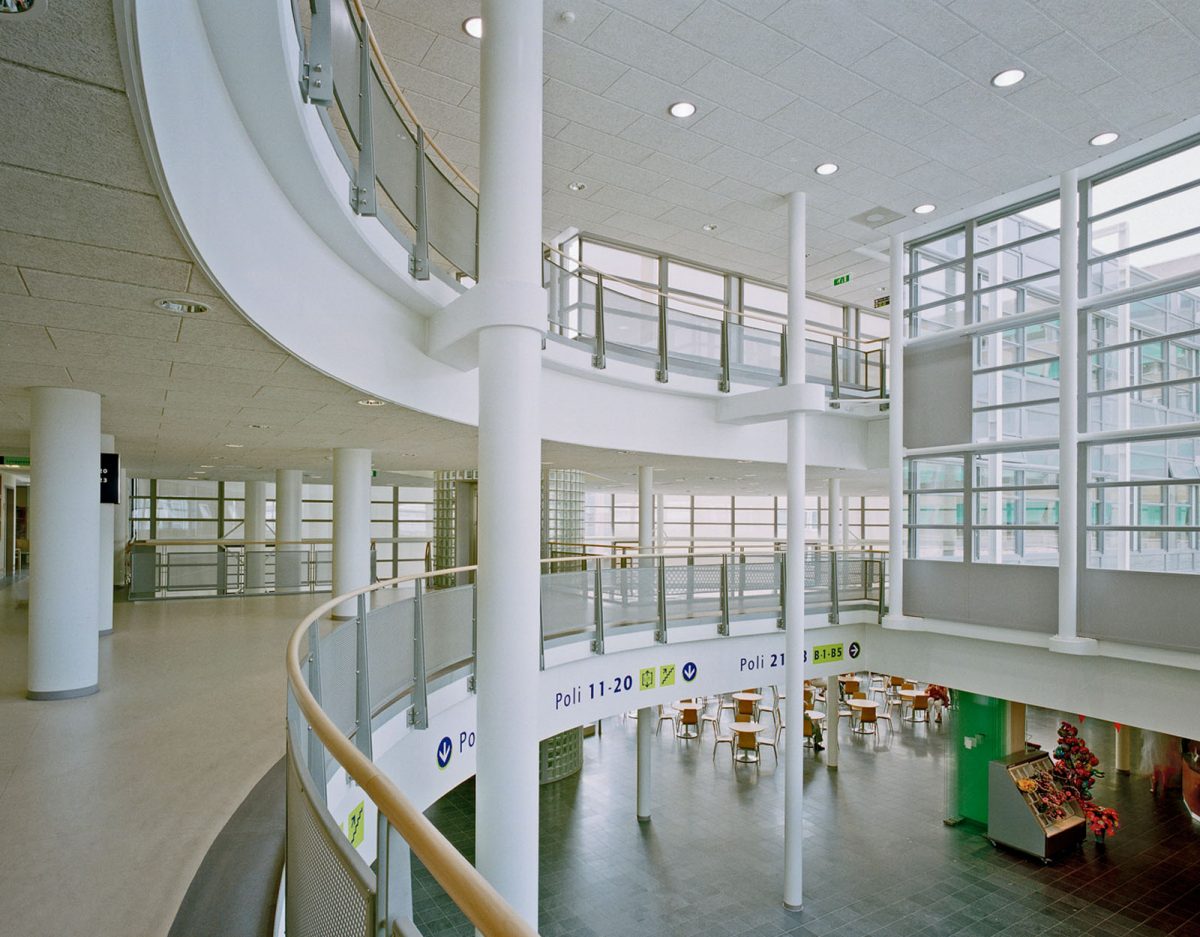
For any large building, good orientation is an essential quality. At the Dijklander Hospital, this has been achieved by keeping the design slim, enabling the patient to have a clear view outside the building, along the entire main traffic route. Most corridors and waiting rooms enjoy daylight, with an outside view on one side and rooms on the other.
Locality determines appearance
The Dijklander Hospital will take on a number of typical characteristics of the town of Hoorn and the surrounding area of West Friesland, such as the canal in front of the building and the light-coloured lower facade with a stone-based superstructure. The vertical columns along the horizontal facade mimic trees along a polder-side road. The colour of the brick refers to the red tiles of the West-Friesian farmhouse roofs. The design of course has a number of unique features. The upper floors are recessed, not only softening the contours but also enabling the lower storeys (3 levels ambulatory care) to be developed independently from the upper storeys (2 levels for clinical functions). The block with day accommodation protrudes outwards, disrupting the overall rhythm of the facade in an appealing and eye-catching manner.